Our laboratory has long focused on fundamental questions in drug delivery, including the design of polymer- and lipid-based carriers, their interactions with biological barriers and immune cells, and the mechanisms governing their in vivo transport and therapeutic effects. A major goal of this research is to translate mechanistic understanding into delivery technologies that are more selective, efficient and clinically applicable.
In 2021, Prof. Yucai Wang and colleagues co-founded Alphana Bio, a biotechnology company dedicated to translating advances in drug delivery and RNA therapeutics from the laboratory into medicines. Building on research in biomaterials, lipid nanoparticles and nucleic-acid delivery, Alphana has established delivery and therapeutic platforms spanning mRNA vaccines, therapeutic cancer vaccines, in vivo immune-cell engineering and immune modulation.
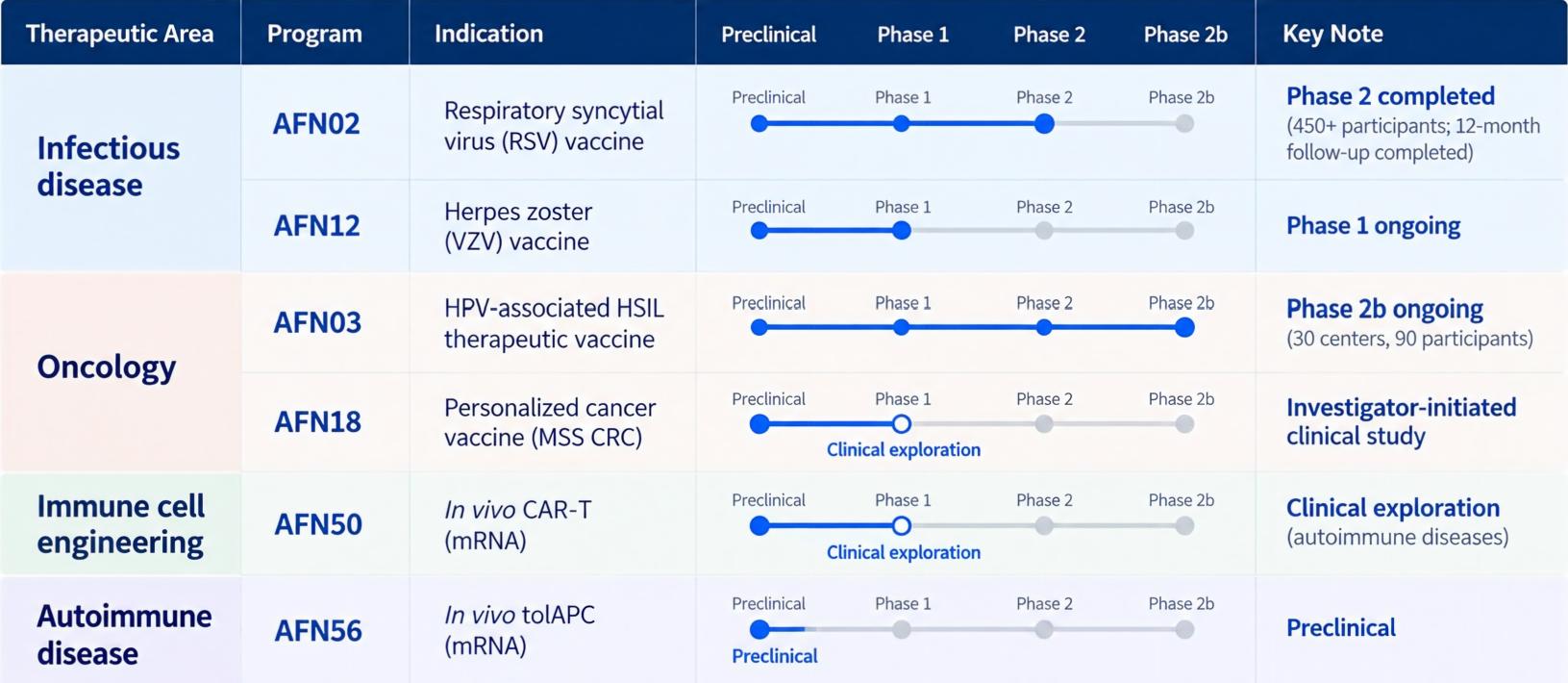
Several programs originating from these technologies have now progressed into clinical development, including Phase II and Phase IIb studies, as well as investigator-initiated clinical exploration. The current pipeline covers infectious diseases, oncology, autoimmune diseases and in vivo cell engineering, illustrating the translation of delivery science from fundamental research to therapeutic development.
These translational efforts are closely connected to our basic research. Clinical development continuously raises new scientific questions concerning tissue and cell selectivity, biological barriers, expression kinetics, immune regulation, safety and therapeutic response. We therefore view fundamental research and clinical translation as a continuous cycle: mechanistic discoveries guide the development of new delivery technologies, while challenges encountered in clinical translation generate new questions for fundamental research.
Selected translational programs arising from our research in drug delivery and RNA therapeutics are shown below.